
Sometimes we find ourselves in difficult relationships or circumstances where we feel out of control and hopeless, maybe because we can’t change the situation or that person. In some instances we have no choice but to stay with the pain or discomfort. For example, living circumstances, a difficult relationship (with your child or spouse), going to school when you’re being bullied, staying in a job you hate, or maybe your grieving the loss of something or someone. Often we focus disproportionately on the things we cannot control, leading to anxiety and more unhappiness. The below exercise is designed to help you highlight elements in your life you can control, to help you feel more empowered. Personally control is a lifeline for me, so I find this a useful exercise to stop me spiralling into negative thoughts, when life circumstances take their own path. I can’t always apply myself to this type of work, its simple but it’s not always easy. But when I am reminded of this one, in my own tool kit, I know it helps.
There are many tools and much advice all over the internet on how to reduce anxiety and stress, maybe too many to keep track of. But if you’ve stumbled upon this page and you’re looking for something to help yourself or your child, with what might seem like an impossible situation, maybe give it a go.
Children and teens certainly lack much control in their lives. They must: go to school, learn, wear uniform, go to bed at an appropriate time and so on. So, its a very helpful exercise to highlight what things they can control, but it might involve moving some of those boundaries (or getting creative to create more choice) you have in place, to help your child feel more empowered to make decisions for themselves.
Changing the way we think about problems is just one way to reduce stress and increase our happiness, but it’s not the method for everyone. Sometimes working with a counsellor or another professional is best for you, but if you’re the type of person that enjoys training yourself to do things differently, changing your behaviour, changing the way you think or you’re at a loss with what else to do, then take a look below.
If we look a little closer at our difficulties, there are often things we can or do control in our lives. Anxiety feeds on negative thoughts, so if we don’t stop and make it clear, that we can take action, or highlight where we do have control, then our negative thoughts may spiral and we might feel a disproportionate amount of unhappiness or feel a lack of empowerment. Having more control in your life or situation can reduce feelings of hopelessness and you’ll feel more empowered. Feeling empowered will boost your self-esteem and confidence, leading to reduced anxiety and stress.
The Circle of Control can help you take a closer look at your situation or relationship. It can emphasise what you can control, helping you understand your situation/relationship more clearly and helping you feel more empowered, in what might feel like an impossible situation.
Here are some examples of the circle of control diagrams. There is also a blank diagram to create your own.
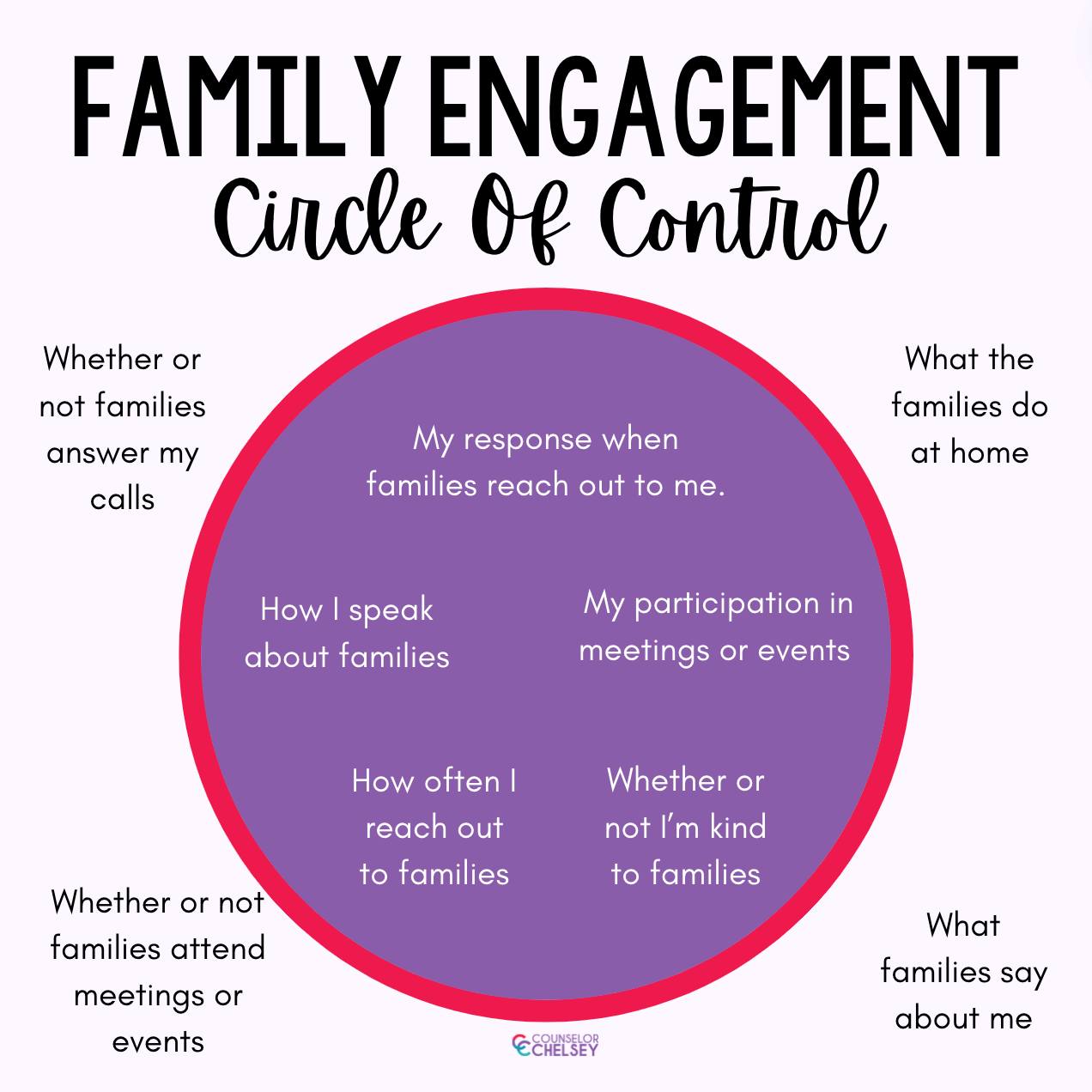

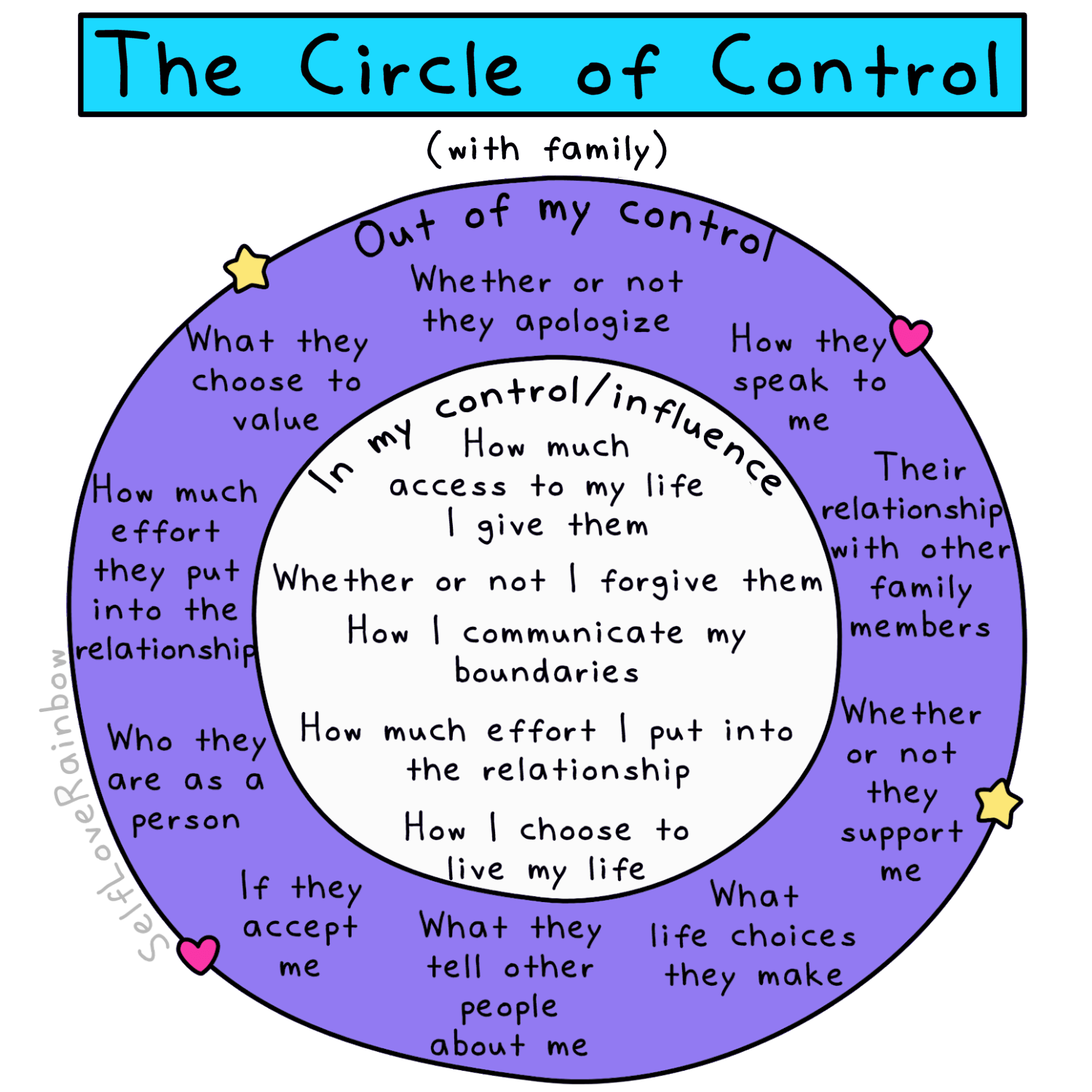
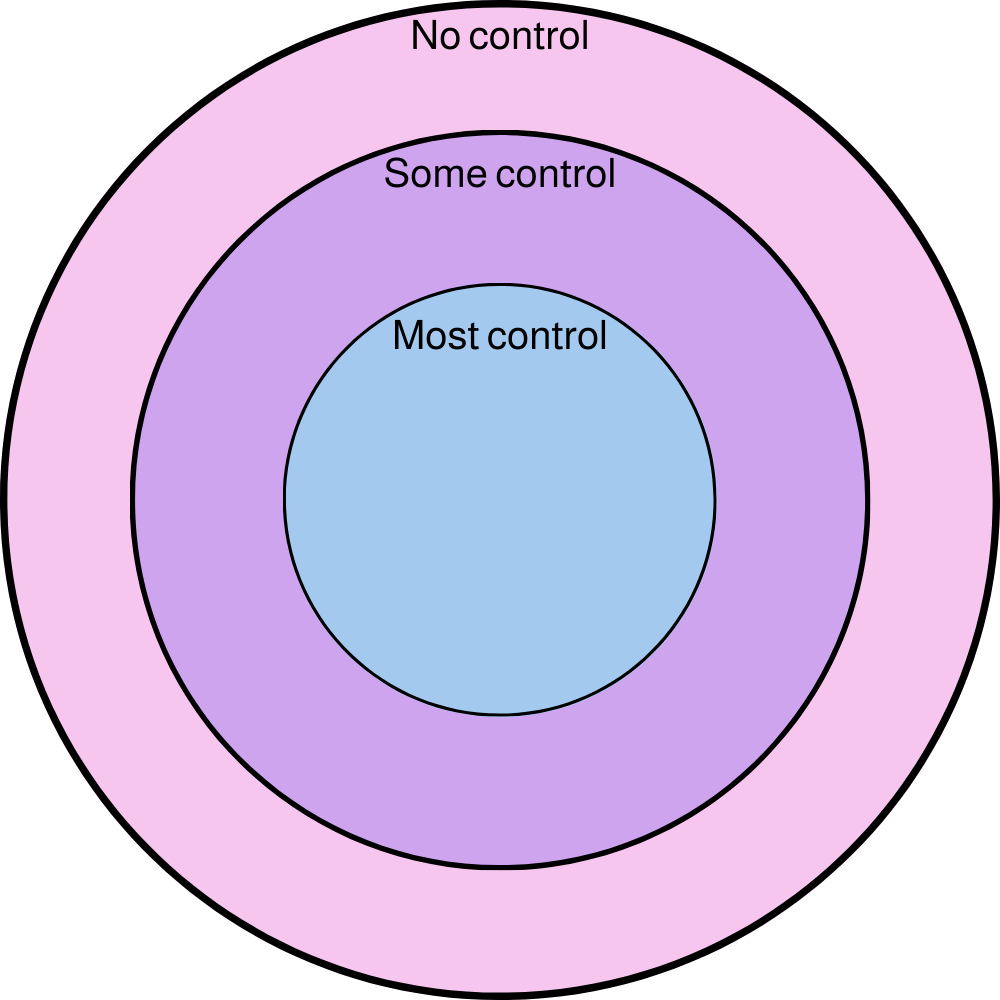
You might also prefer to write a list, rather than use the diagram. Here’s a few example of how I would structure a list with a client:
This client is experiencing a difficult time parenting a child who is unhappy, suicidal and self harming:
Can control : I can control what access my child has to harmful substances or objects in the household, I can sit and provide my child with the time and opportunity to talk to me, I can focus on keeping myself calm and grounded, I can offer to organise professional support from a GP or counsellor, I can give my child relevant helplines, I can listen to my child when they tell me how they feel and offer comfort and advice. I can request support from school to help support my child. I can regularly check my child’s room and school bag for harmful substances or objects. I can advise my child to use alternative methods to help combat self-harming. I can ask my child how they feel regularly and I can ask my child what they believe would be helpful and listen to their needs. I can try to understand how my child feels by reflecting on their childhood experiences, how they have been parented, their personality and what triggers them. I can find a way to show compassion.
I cannot control: If my child feels suicidal, if they choose to talk to me/someone else or not, if they access support from professionals, if they continue to self harm using other methods, if they find a way to access tablets or objects from outside the home and have an attempt on taking their life, if they don’t know what will help them or why they feel the way they do.
This is obviously a really extreme example, but hopefully you can see how there is so much in our control on reflection, so many steps we can take and healthy ones in a very difficult situation.
Here’s an example of a parent struggling to help a child spend less time on technology and eat healthier. Their child has not been sleeping well and feeling more anxious than usual.
I can control
I can control the wifi connection in our home,I am responsible for providing or not providing access to technology in the home, I can choose to offer my child an allowance or not, I am responsible for the type of food my child has access to in the household or what I cook, I can choose to walk out of the room when my child is screaming, I can put boundaries in place and follow through on consequences or rewards. I can offer alternative entertainment like games or walks, I can model the behaviour I am seeking.
I cant control
I cant stop my child from wanting to play technology, if they feel angry towards me for turning off the wifi, if they feel upset or bored, if they refuse to eat, If they don’t respect my boundaries, if they don’t sleep once in bed, if they wont walk or play or spend time with me.
This isn’t a parenting class, so I wont offer more on the above examples, but if you’re keen to read a great parenting book I would definitely recommend Calmer Easier Happier Parenting
Hopefully you can give this a go with something you’re struggling with.
Ultimately we cannot control everything and if after this exercise you’re left with difficult feelings knowing you cant control certain things, this might be why you’re experiencing high levels of anxiety or high levels of stress. Maybe you’re in fear of saying no to someone, maybe you’re terrified of what people think of you and it’s dictating your behaviour every day and having a huge impact on your relationships and your mental health, if so you might benefit from seeing a counsellor to help you dig a little deeper and look at you fears and anxieties. In the meantime and if counselling is not an option, seek help from your GP to find ways to help reduce your anxiety.
The body and the mind need rest from stress, fears and worries so, however that looks for you or your child, take more rest if you’re experiencing high levels of anxiety.
Best of luck
Thank you for reading
Hayley
‘
 Home
Home 